




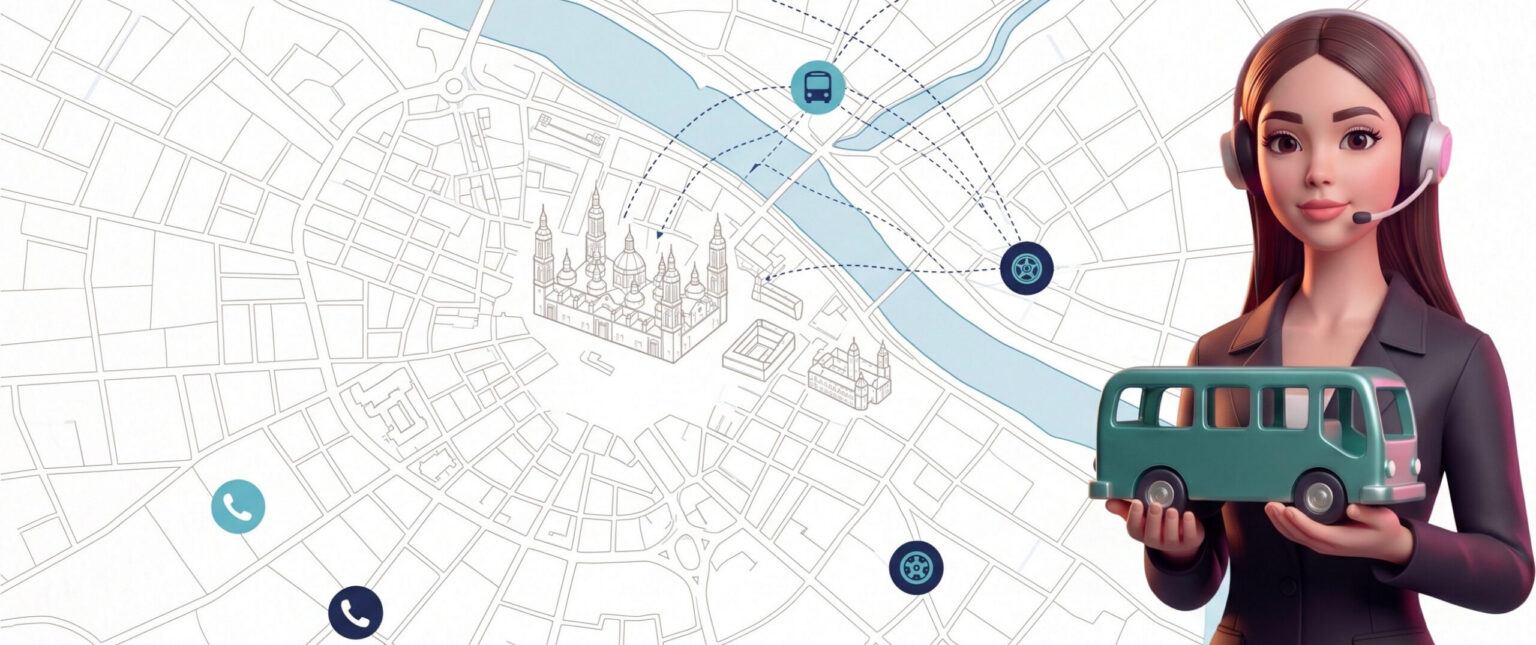



Automatic call handling, resolution of common questions about schedules and routes, referral to support when necessary, and fluent conversational support.
The team received many repetitive calls asking for schedules and routes. Each simple inquiry took up one line and one minute of the team’s time, even during the busiest hours.
HeyLaia, Deveco's AI assistant for phone support, answers those questions automatically by phone 24 hours a day, and only passes the call to a person when necessary.
Instantly, presenting himself as the station's assistant.
By their route or service. For example, the next departure to their destination.
Instantly, in a conversational and natural way.
The call ends there, without passing through any person.
HeyLaia hands over to human support.
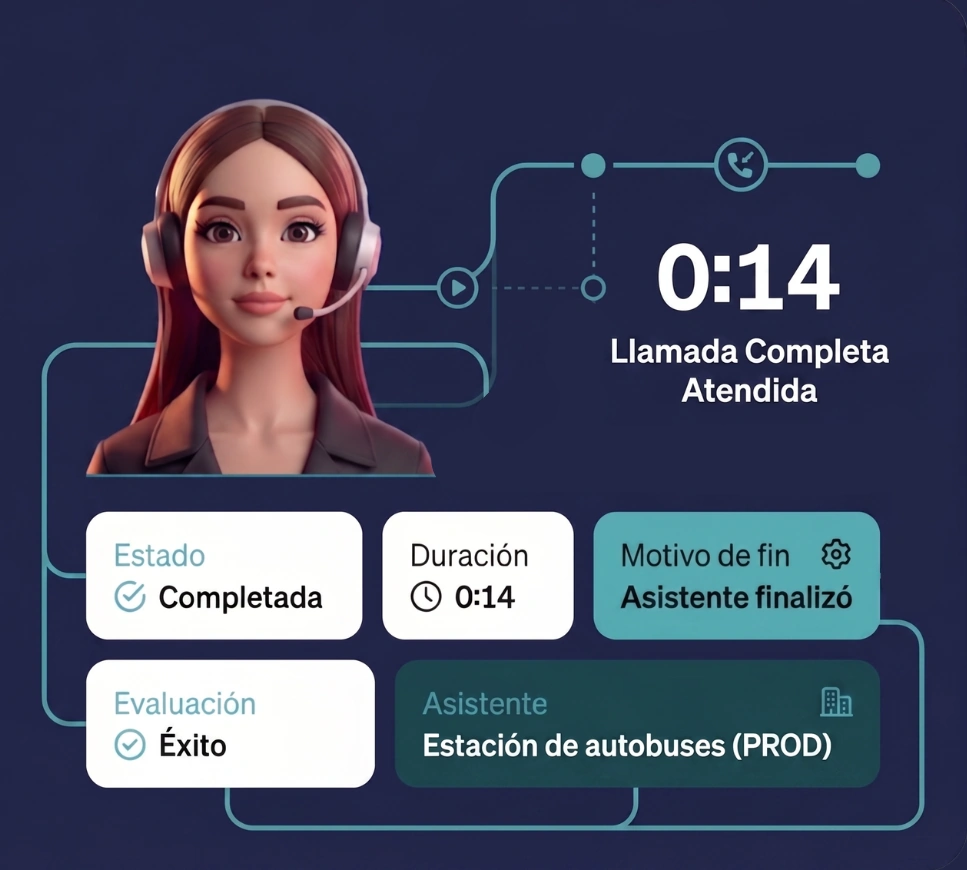
Duration: 14 seconds. The time it used to take someone just to pick up the phone is the whole call here. Resolved without human intervention.
Tell us about your case. We’ll give you a first assessment without obligation in less than 24 hours.
AI assistant in WhatsApp
Customers asked WhatsApp about the status of their order, and someone on the team had to manually look it up. Now an AI assistant connected to the management system instantly responds and, in addition, recommends products and sends the link to buy them.
AI and digital twins
Evaluating the risk of thrombosis after an aortic surgery requires combining imaging tests, anatomical models, and simulations that are expensive and difficult to integrate into daily practice. Now a digital twin of the patient themselves automates the entire process, from image segmentation to risk prediction.
News about applied AI, process automation, and real-world use cases.
© 2026 Deveco | All rights reserved. Technology consultancy in Zaragoza. Experts in artificial intelligence.